
Cowboys Protection Breakdown: How Green Bay's Blitz Confused Dak Prescott | Broaddus's Scout's Eye

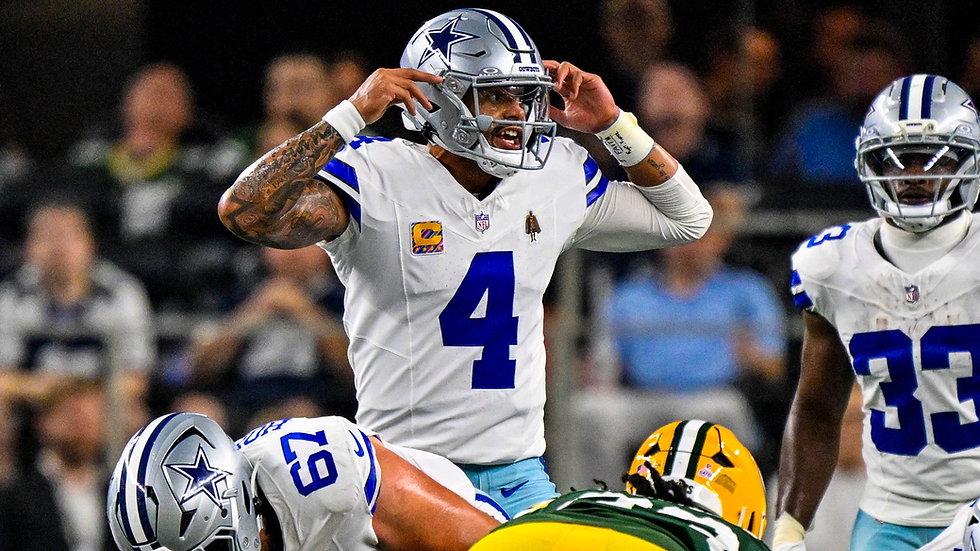
After studying Dak Prescott against Green Bay's pressure packages, the biggest takeaway is just how many problems the Cowboys had identifying and picking up the blitz.
There were opportunities to make plays against this defense, but too often Prescott was forced to throw without his feet underneath him or with a free rusher bearing down.
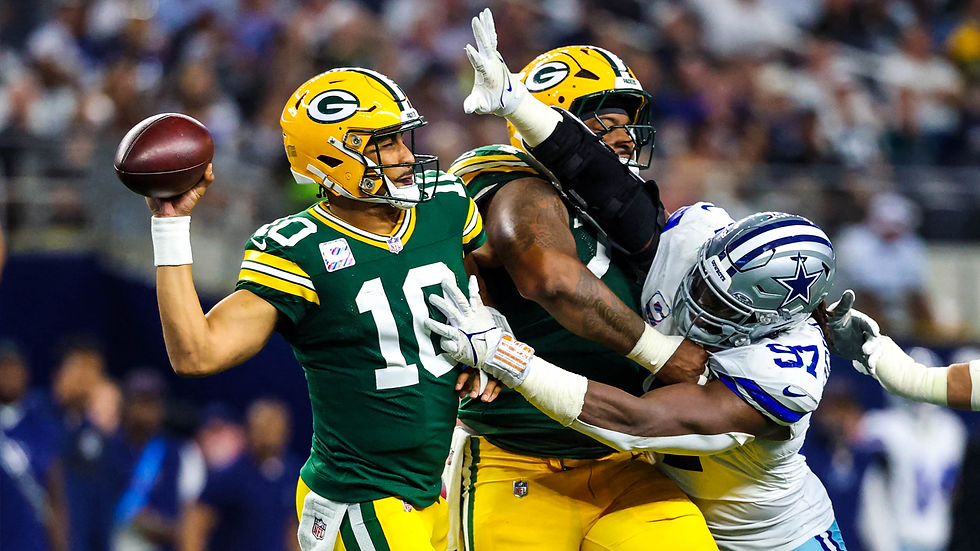
What stood out was that Green Bay didn't always have to bring more defenders than Dallas could block. There were snaps where the Cowboys had enough blockers to handle the pressure, but communication and execution broke down.
The most troubling aspect of the film was the number of free runners Prescott faced.
Where the Cowboys' Protection Broke Down
Tyler Smith and Tyler Guyton
Williams came free between Smith and Guyton on the seven-yard completion to Ryan Flournoy.
Later, Smith pointed toward Guyton before the snap on fourth-and-one, but Franklin still came through untouched.
Those are the types of breakdowns that can't happen against a defense willing to bring pressure as aggressively as Green Bay.
The offensive line has to recognize the front, communicate the responsibilities and execute the protection after the ball is snapped.
Tyler Smith and Cooper Beebe
On an incompletion intended for CeeDee Lamb, neither Smith nor Cooper Beebe secured a defender, leaving Prescott exposed to a shot in the ribs.
Green Bay didn't need an elaborate pressure package to create the problem. Dallas had enough blockers, but the assignment wasn't handled correctly.
Terence Steele and Tyler Booker
On a slant intended for Lamb, Steele blocked outside while Booker came inside.
That left Prescott without the protection he needed to set his feet and deliver the football.
Smith also failed to handle the movement involving Franklin on an incompletion to Flournoy. On another play, he failed to pick up Bullard, forcing Prescott to deliver a three-yard completion to Flournoy off his back foot.
The concerning part is that these weren't all situations where Green Bay simply overwhelmed Dallas with numbers.
On one throw intended for George Pickens, the Cowboys had three blockers accounting for two rushers, yet a defender still came free.
That's an execution problem.
How Dak Prescott Responded to Pressure
Prescott deserves credit for several throws where he managed to get the football out despite immediate pressure.
His seven-yard slant to Flournoy with Williams coming free was a good example. He also found Pickens for seven yards while taking a shot to the head from Williams.
Hunter Luepke did a nice job picking up the inside pressure to give Prescott a chance on that play.
But there were also throws where Prescott's mechanics suffered.
The fourth-and-one incompletion to Lamb was especially disappointing. Franklin came free, Prescott threw off his back foot, and the play never really had a chance.
What made it worse was that Williams appeared to be available underneath for the first down.
There was another missed opportunity when Lamb adjusted his route to provide a hot answer against pressure, but Prescott never looked his way. He eventually worked back across the formation, was flushed to his right and couldn't connect with Flournoy.
When Prescott trusted what he saw and delivered the ball quickly, he was effective.
When he had to hold it or reset against pressure, the results were much less consistent.
What Worked Against the Packers' Blitz
The Cowboys did have answers when their protection held up.
The best throw Prescott made all night was the 16-yard dig route to Lamb. The protection was outstanding, Lamb gained inside position on Bullard, and Prescott delivered an accurate ball with time to operate.
The quick slants were also effective.
Pickens gained seven yards on a well-blocked play where Prescott got the ball out immediately. Lamb had another seven-yard reception on a quick slant.
Flournoy also showed the ability to separate, particularly on his 11-yard pivot route. Unfortunately, a penalty on Booker wiped out the benefit of the play.
These were examples of how Dallas could attack Green Bay without asking its offensive line to hold up for an extended period.
The quick game needs to be part of the answer against pressure. When the quarterback can identify the rush and deliver the football on time, those short completions can make the defense pay for sending extra defenders.
Where Green Bay Fooled Dallas
One of the better defensive calls came when Green Bay showed pressure with Williams before dropping him into coverage.
Prescott was influenced into throwing the smoke route to Lamb for only one yard.
That's an important distinction when studying this game. Green Bay wasn't simply sending pressure and hoping to get home.
The Packers were also manipulating Prescott's reads, presenting pressure before the snap and changing the picture afterward.
Those looks made it harder for Prescott to determine where his immediate answers would be.
Dallas has to be prepared for that distinction. Identifying the apparent pressure before the snap is only part of the job. The quarterback and offensive line also need to recognize what the defense does once the ball is snapped.
Individual Player Observations
CeeDee Lamb
The 16-yard dig was the best combination of route, protection and quarterback execution.
Lamb also provided a hot-route answer that Prescott failed to recognize. There was an early incompletion where the ball was low and Lamb couldn't adjust. That throw needed to be better.
Ryan Flournoy
Flournoy showed toughness working the slant with pressure coming and demonstrated his ability to separate on the pivot route.
There was also a missed opportunity when he struggled to release against a jam and couldn't adjust to Prescott's throw after the quarterback escaped.
George Pickens
Pickens was productive on quick throws when Prescott had an immediate answer.
His incompletion with a free runner bearing down on Prescott was fortunate not to become an interception.
Hunter Luepke
Luepke's blitz pickup on the seven-yard completion to Pickens was one of the better protection snaps in the study.
Recognizing the inside pressure and executing the assignment gave Prescott a chance to make the throw.
Jake Ferguson
Ferguson caught an 11-yard pass despite getting driven back toward Prescott in max protection.
He also provided a seven-yard completion when Prescott came off his initial slant read to Pickens.
These individual plays show that Dallas had opportunities against the pressure. The challenge was executing consistently enough to take advantage of them.
The Biggest Concern Is Communication
My biggest concern coming out of this study isn't necessarily how Prescott handled the blitz.
It's how poorly the Cowboys handled the protection responsibilities in front of him.
There were too many occasions where a free runner came through untouched. Some were caused by movement, others by poor communication, and still others by blockers simply failing to account for the correct defender.
Prescott wasn't perfect. He missed an available receiver on fourth-and-one, failed to recognize a hot adjustment by Lamb, and had some throws where his accuracy suffered.
But it's difficult to operate consistently when you're taking hits or throwing off your back foot.
The encouraging part is that Dallas showed it could beat Green Bay's pressure with quick throws, inside routes and receivers who could separate.
The answers are there. The Cowboys have to execute them.
THE SCOUT'S EYE
Green Bay didn't have to win every individual matchup to disrupt the Cowboys.
Too often, Dallas made the job easier by allowing defenders to come free.
The film shows why this goes beyond simply blaming the offensive line or the quarterback. The protection has to be communicated correctly, Prescott must recognize the answers against pressure, and the receivers have to be ready when those opportunities present themselves.
The Cowboys have enough weapons to punish teams that blitz them. The quick game worked when the protection held up, and Lamb, Pickens and Flournoy showed they could separate.
But until Dallas cleans up its protection communication, opposing defensive coordinators will continue attacking these same weaknesses.
That's the biggest lesson from this film: the Cowboys have to identify the pressure, account for the rush and execute their assignments before they can make defenses pay for blitzing.
— Bryan Broaddus

Comments