
Cowboys vs. Packers: How Green Bay's Blitz Exposed Dallas' Protection | Broaddus's Scout's Eye

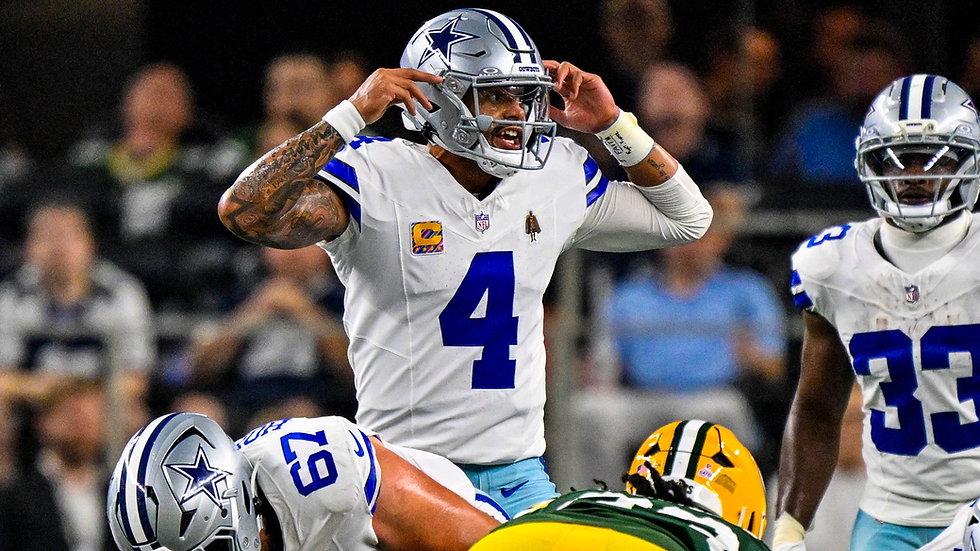
After going through these 20 plays against the blitz, the biggest takeaway is how often Green Bay was able to affect Dak Prescott without necessarily getting him on the ground.
I don't know Dallas' offensive line calls or protection rules, but there were too many free runners, too many protection mistakes and too many occasions when Prescott was forced to deliver the football without setting his feet.
When Dallas handled the pressure, Prescott generally made good decisions and delivered accurate throws. But the breakdowns up front made it difficult for the Cowboys to consistently attack downfield.
The biggest problem wasn't always getting physically beaten. It was failing to identify and account for the rush.
What I Saw on Film
1. Too Many Protection Mistakes
The offensive line had too many mental errors.
The most concerning part wasn't necessarily players getting physically beaten. It was the number of times Green Bay brought pressure and Dallas had blockers standing around without an assignment.
Tyler Smith was involved in several of those situations. The twist stunt involving Franklin was another example of the Cowboys failing to sort things out after the snap.
When you have three blockers attempting to account for two rushers and still allow a defender to come through untouched, something has gone wrong with the protection.
These are the kinds of mistakes a defense will continue to exploit until Dallas proves it can handle them.
2. Green Bay Disrupted Prescott's Throwing Mechanics
The pressure also affected Prescott's ability to set his feet and deliver the football.
He was forced to throw off his back foot several times. The incompletion to George Pickens that nearly became an interception was a good example.
There were three Cowboys attempting to block two Packers, yet a defender still came free. Prescott had to deal with immediate pressure rather than being able to step into the throw.
That's a difficult way to operate an offense.
You can have talented receivers who win their routes, but if the quarterback is forced to rush his delivery before he can get through his reads, you're limiting what the offense can do.
3. Prescott Missed Some Answers Against Pressure
Prescott wasn't perfect in this game, either.
The fourth-down incompletion intended for CeeDee Lamb stands out. Javonte Williams was available underneath for the first down, but Prescott attempted a more difficult throw while retreating from pressure.
There was also a play where Lamb ran the hot route and Prescott never looked in his direction.
Those are opportunities the quarterback has to recognize.
When a defense brings pressure, the offense needs to have an answer built into the protection and route combination. That means identifying the extra rusher, knowing where the hot receiver is and delivering the ball when the defense leaves an opening.
Dallas has the weapons to punish teams that blitz. But those opportunities won't matter if the quarterback and protection don't recognize them quickly enough.
4. The Quick Passing Game Had Success
There were also encouraging examples of what this offense can do when it handles pressure correctly.
The slants to Ryan Flournoy, Pickens and Lamb were effective when Prescott could get the football out on time.
The 16-yard crossing route to Lamb against Javon Bullard was the best example of what this passing game can look like when the protection holds up.
The receivers were able to separate, and Prescott had the opportunity to deliver the football into space.
That's an important part of the solution.
Dallas doesn't have to defeat every blitz with a deep pass. Quick-breaking routes, slants and crossing patterns can force the defense to pay for bringing extra rushers.
But the protection and timing have to match the call.
The Hits on Dak Prescott Are Concerning
Prescott took a shot to the ribs, another to the head, and faced several unblocked rushers.
Dallas can't continue to expose its quarterback to those kinds of hits.
Green Bay didn't have to get overly complicated to create problems for the Cowboys. It challenged Dallas with pressure, movement and coverage disguises, and the Cowboys struggled to consistently identify and handle those looks.
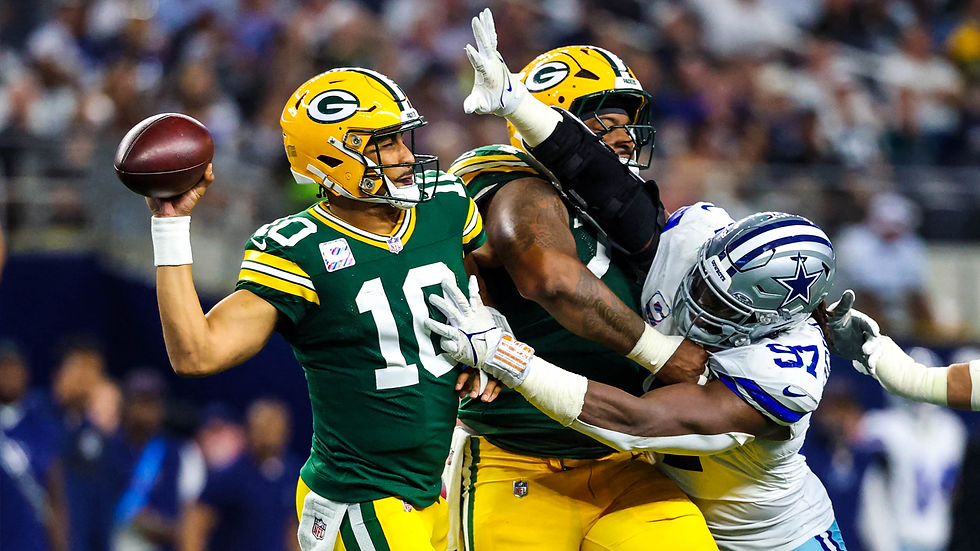
The Packers hit Prescott seven times, and their pressure contributed to two interceptions in the 23–13 victory. Both interceptions came during a first half in which Dallas was unable to generate any points. Prescott has to be better at recognizing some of the available answers, but the protection has to give him a reasonable opportunity to execute them.
The quarterback can't be expected to overcome a free runner on every passing down.
What Dallas Must Fix
My biggest concern coming out of this film is the communication up front.
When you have three blockers for two rushers and still allow a free runner, that's not a talent issue. That's an assignment issue.
The Cowboys have enough weapons to punish teams that blitz them. Lamb, Pickens and Flournoy all showed they could separate quickly.
But until Dallas gets its protection assignments cleaned up, defensive coordinators are going to continue attacking these same weaknesses.
The answers have to come from the entire offense.
The offensive line needs to identify the pressure and execute its assignments. Prescott has to recognize when the defense is giving him an opportunity to get the ball out quickly. The receivers need to be ready to adjust their routes when the pressure dictates it.
And the coaching staff has to give the offense reliable answers when defenses change the picture before the snap.
THE SCOUT'S EYE
Green Bay showed Dallas exactly where the problems are.
There were too many free rushers, too many breakdowns in communication and too many snaps where Prescott had to make a decision under immediate pressure.
Prescott missed some opportunities, but the bigger problem was how frequently the protection put him in difficult situations in the first place.
The quick game worked when Dallas executed it. Lamb, Pickens and Flournoy showed they could win their matchups. There are answers available.
Now the Cowboys have to identify them, communicate them and execute them consistently.
Until Dallas fixes its protection problems, opposing defensive coordinators are going to keep bringing pressure and challenging the Cowboys to prove they can handle it.
— Bryan Broaddus

Comments